
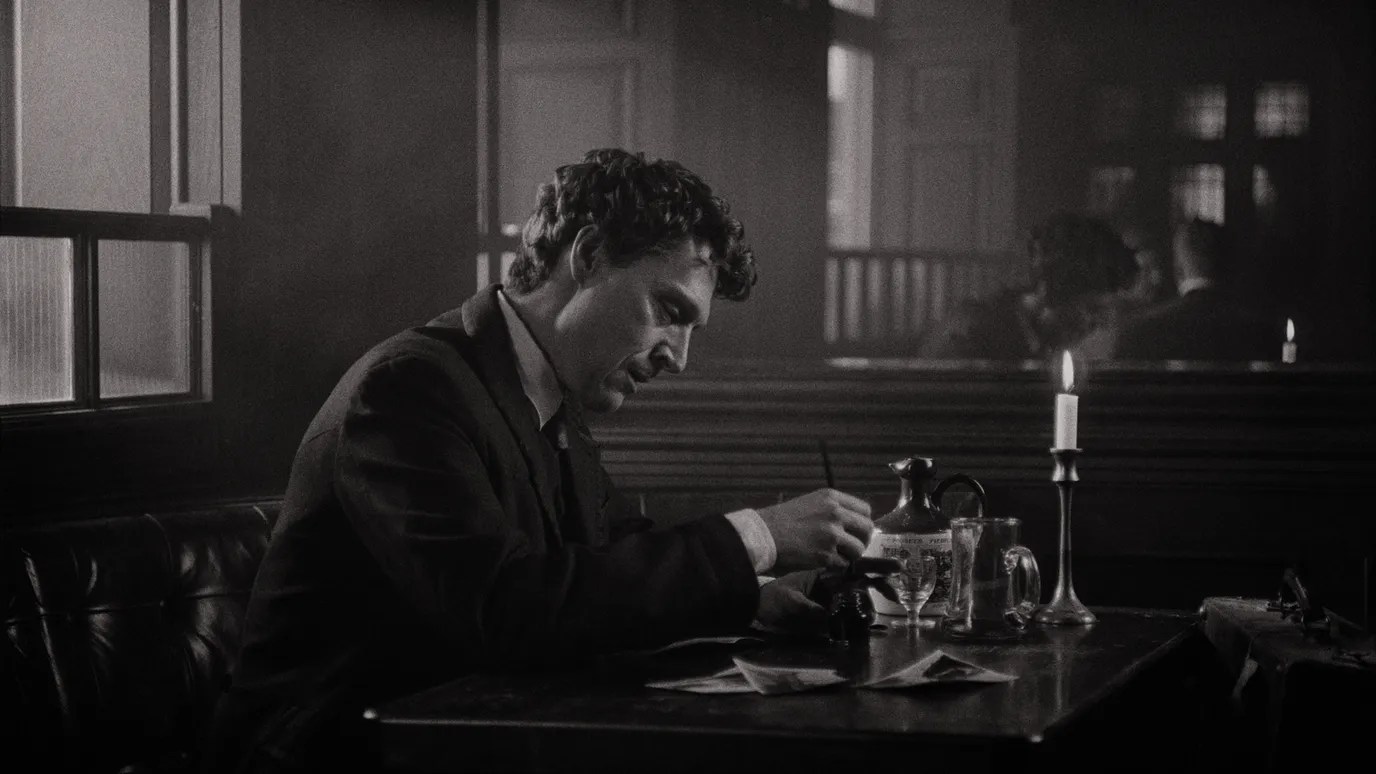
The mere background of the cinematographic biography of Edvard Munch reflects the artistic turmoil the expressionists favored so much at the peak of their existence. Supposedly four people were working on the scenario to have a logical and consistent structure. Thus, several other individuals were hired to comprehend the thoughts and visions of one director. Therefore, the movie may be declared to be a mirror for a single mind’s deepest area, constituted by unexplained emotions or ideas. It happens that the identical phrase could be said about the aesthetic movement to which Munch belonged. How else would one imagine a better way to present the life path of the world’s most recognized expressionist creator, known for his subjectivism and individual interpretation of reality?
To surprise and to impress the public are two distinct notions that each director aspires to achieve with their production. A biographical creation may appear as a choice that would rather not attain both of these intentions. A conscious movie-viewer could be already familiar with the life course of the protagonist, thus the presented storyline might not pose a great revelation for their expectations.
Munch, however, electrifies throughout its entire length. Again, the reality of one is exhibited by four remote characters, each from a distant universe. The change of narrator likewise brings the moderation of scenographical elements. Munch’s period of alcoholism is told in black-and-white scenes, whereas the memoir of his first love is dominated by pastel colors and a view of lush nature. An initiative that could easily occur as a chaotic compilation of the unconnected fragments, turned out to be a well-balanced collage and a successful execution of new techniques. The elaborate form exceeds the content by still allowing it to evolve and develop particular threads with the desired fluidity.
The plot is rather an interpretation, not a replica of Munch’s life path. The director used the movie to materialize his senses regarding the story. Any notion presented in the film shall be seen and understood from two different perspectives. Such a procedure is a perfected reference to the expressionist ideal perception of art, which is described as a glorification of self-expression. Moreover, we see an explicit breaking with the principles of naturalism in favor of a subjective approach to the creation of subsequent masterpieces.
Similar allusions are found in the constant feeling of unrest that accompanies a viewer during the movie. Expressionism, likewise, was an art movement that developed from the sense of anxiety towards the current state of socio-political affairs. Intuition played a huge role in the reception of Munch’s works, and it also plays a huge role in understanding this biography of his. Individualism should set a path for the viewer to get to the heart of this cinematographic production. Those notions create a precise reference to expressionist generativity and a movie.
“Much” is an incredibly interesting creation, designed to surprise the movie-viewers and to impress the museum-goers. The biography, being a splendid combination of cinema and fine art, restricts itself to merely being inspired by the life of the acclaimed persona and the movement he was associated with. The film of Henrik Dahlsbakken proves scream is not the loudest form of a human expression, but the acts he generates through non-verbal shapes of expression.
Written by Agata Zagozdzon
 lariot.nl