
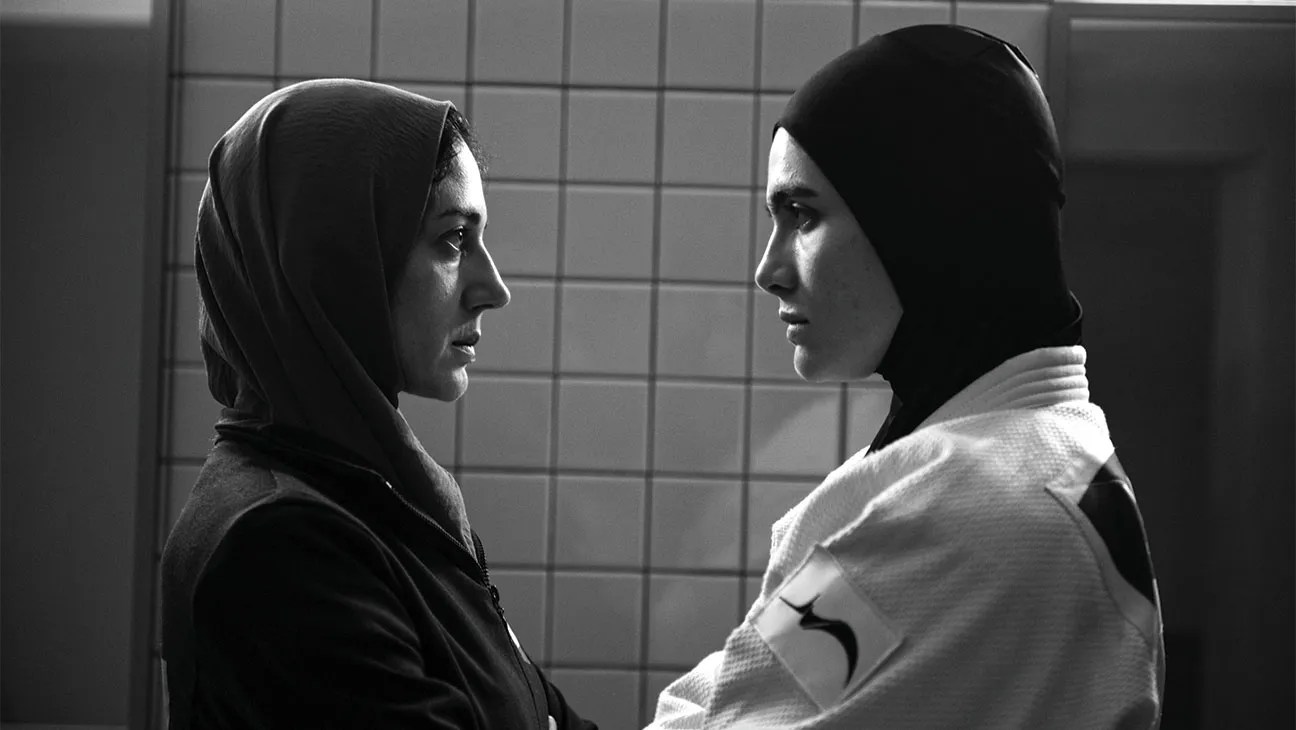
Judo is a martial art based on self-defense, which, along with the system of conducting a physical duel, has also developed a separate philosophy that all competitors of this discipline should adhere to. The general direction of this thought is to spread goodness with the forces available to us, so as to make the greatest possible use in the world with minimal effort. Judo never intended to completely destroy the opponent, but only to incapacitate him from doing an even greater evil. Contrary to general appearances, one does not have to give up to win, as success comes from improving oneself and using any efforts simply with dignity. Yet, will this philosophy work in the fight against an opponent the size of a religious despotic monarchy?
Leila is an Iranian judo competitor who, thanks to her hard work, qualified for the world championships in Tbilisi, Georgia. This young woman, the closer she is to the final, the greater the chances to face the representative of Israel, which the Tehran regime absolutely does not want to agree to. The Supreme Leader himself orders the contestant to withdraw from the competition. When the sportswoman objects to political pressure, the government puts its dirty hands on her loved ones.
“Tatami” (2023) is one of the best films I recently watched. I have a general weakness for political movies, but the story presented by Guy Nattiv and Zar Amir Ebrahimi (the directors) contains a lion’s share of personal elements (or at least those that are easier to look at through the eyes of a human being, not necessarily a cinema viewer) that make the production twice as gripping. It is quite a simple and uncomplicated story, but also very modern. The topic of Iran, women, hijab and even sports – after all, the whole world was just following the actions of its national athletes in the French capital. “Tatami” fits perfectly into the global – one might say: social – trend, but that is not the secret of its accomplishment.
Think back to “Twelve Angry Men” for a moment. A wonderful, outstanding film. To this day I am grateful to my mother for being the first to show it to me. However, let’s focus on the details of this masterpiece. A simple arrangement – one room, twelve actors dressed in uncharacteristic costumes. The plot is an eternal debate, a gradual pursuit of the truth. The modern human eye has nothing to get excited about (also because of the film’s black and white image). And yet – we all remember this story and we all associate the emotions we experienced with or against the characters. “Twelve Angry Men” makes crowds of cinema-goers fall in love with its very simple composition, but a very rich plot. The tale about a young alleged criminal hides deeper social issues that many communities still struggle with today.
And that’s equally what “Tatami” does. The camera doesn’t reach much further than the sports hall where the championships are held. There is quite a simple set design, simple costumes and dialogues, which, however, evoke the most complex and non-obvious emotions in the viewer. Empathy would be lacking for those who would unambiguously judge Leila’s attitude and behavior. The political fight for a better today or tomorrow is not a topic that needs unnecessary elements to be talked about. We don’t have to see beautiful costumes or sophisticated special effects, because nothing could ever ennoble the longing for lost freedom.
Recently, the world has often looked to Iran. Cinema also plays an active role in this. Not so long ago, we watched “Holy Spider” on big screens, today it is “Tatami”. Productions like these present us with a very personal approach to huge events in global politics and remind us that there are worlds that need to be told in shades of only white and black.
Agata Zagozdzon
 lariot.nl