War films require maturity. Not from a viewer, but from their creator. Explosions, shootings – these are only additional elements that bring closer the full visualization of the presented scenes. The whole essence, however, should be contained in the skillful depiction of the characters’ emotions concerning their survival. War itself is not worthy of great art – it is a dehumanizing extreme of social envy and absolute destruction. However, these hundreds, thousands, and even millions of human stories, that each subsequent armed conflict brings, (or whose course drastically changes) deserve the highest form of recognition – intergenerational remembrance. What needs to be told requires a subtle narrative, not an explosive background. The war is not just a product of the idealized world of Hollywood, but a real human tragedy that leaves its mark on a soul forever. Therefore, it is necessary to mature when talking about war experiences. One has to know how to preserve these stories in an image – probably the most enduring of all art forms.
“Lee” is a war film, but rather devoid of consistent shooting scenes. The Second World War is told through photographs that the main character took as a war correspondent for British Vogue. Initially, the protagonist actually focuses on capturing the great smoke and fire, claiming that these are the components that most faithfully reflect the martial reality of the time and allow us to understand the full essence of the fights. Only later, when the shadow of totalitarian Germany covers all of Europe and starts affecting people much closer to her than anonymous soldiers hidden behind camouflaging uniforms and oversized helmets, does Lee understand that war is primarily about people and their personal stories. Material products of the civilization causing havoc are nothing more than a mere symbol of all their tragedies.
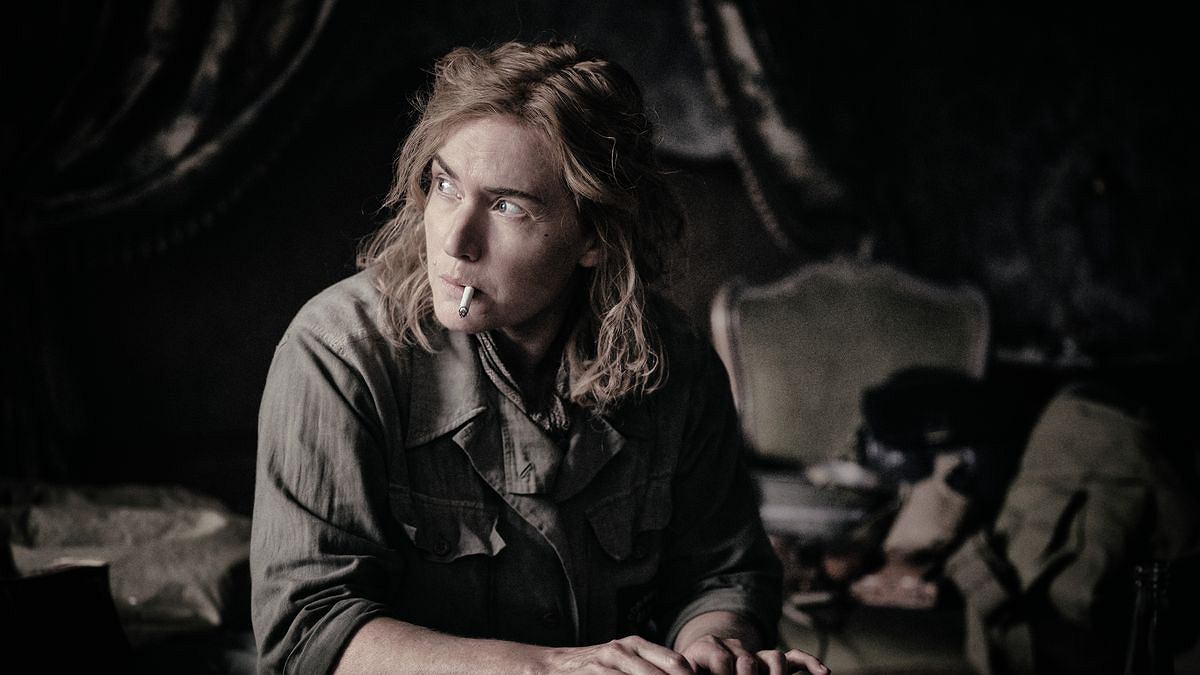
The heroine played by Kate Winslet captures what is most important in these stories – emotions, experiences, tears, screams, silence, losses. As the film progresses, we see how her attitude towards the war changes and how she shapes her own narrative about it. Lee matures into the role of the bearer of human legends about fight and struggle. Love and fear. Life and death. From a playful, young model, she grows up into a fearless woman, ready to sacrifice for the truth to last longer than any regime.
I think that not only the heroine but also the director, turned out to be mature and aware enough to talk about the war. Images of memories combine subtlety, empathy with brutality and terror. Speaking of war films, I would rather compare “Lee” to “Schindler’s List” than to “Dunkirk.” The calm action of this film develops evenly, and a significant minority of the scenes include explosions or shootings. Moreover, the production is about a person rather than a group of people, which makes the plot easy to connect with. It is less like a Greek myth about heroes and more like a family story about our grandfather’s youth. But it is only through such a personal approach to one’s tale that we can understand the hundreds, thousands, millions of other stories that the war brought with it… Or whose course it completely changed.
Although “Lee” will probably not become my favorite war film (I have watched too many of them to have a favorite), I cannot deny that it is definitely a production worth watching. Events known to the entire continent, retold through the gripping narrative of a former fashion muse. Moreover, this is the story that has actually happened. Or rather – all these stories, from Lee Miller’s beautiful photographs, really happened. Even if for a long time, one had difficulties believing in those. Thankfully, they remained remembered, and now we can experience the horror of the war merely through the big screen – such as, among others, this cinematic biography of the extremely courageous woman, Lee Miller.
Agata Zagozdzon
 lariot.nl