
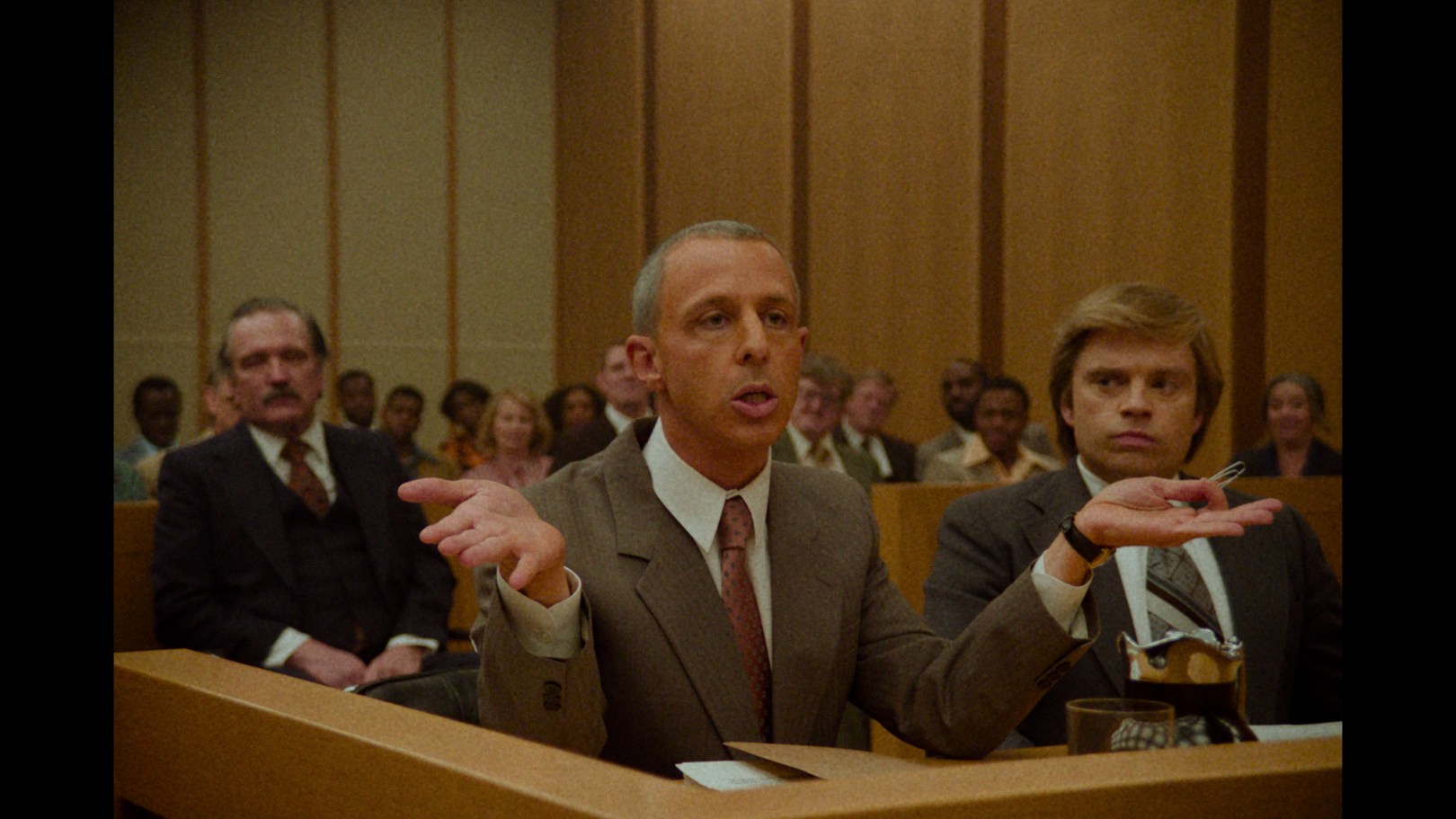
In The Apprentice, Sebastian Stan delivers a remarkable transformation into a young Donald Trump, capturing not just the surface-level traits of the former president but also digging into the insecurities that shaped him on the world stage. Directed by Iranian-Danish filmmaker Ali Abbasi, the film explores Trump’s rise in the 1970s and 1980s, as he learns the ruthless business world under the mentorship of Roy Cohn—played with intensity by Jeremy Strong.
What makes The Apprentice stand out from other Trump biopics is the human element woven into its cinematography. Although the film takes creative liberties with certain events in Trump’s early life, as noted in the opening disclaimer, Abbasi strikes a compelling balance. Stan’s portrayal moves beyond caricature to show Trump as an insecure and sometimes naive young man, desperate for success and his father’s approval. Cohn steps in to fill that emotional gap with his aggressive, morally questionable advice, forming a captivating mentor-mentee relationship that proves key to Trump’s development. Without being heavy-handed, Abbasi invites the audience to draw their own connections to the Trump we know today.
The first half of the film carries a darkly comedic tone, highlighting Cohn’s brazen lifestyle and Trump’s growing admiration for his mentor. Jeremy Strong brings a magnetic energy to the role, and the dynamic between him and Stan keeps you engaged. Still, the film offers a thoughtful critique of power and the corruption it breeds, without feeling overly political.
In the second half, the film loses some of its momentum as it shifts focus to Trump’s business highs and lows. Yet, what stays with you is the tragedy of a man seemingly losing his humanity in the relentless pursuit of success. Abbasi avoids diving too deep into psychological analysis, but the film subtly hints at classic themes.
While The Apprentice doesn’t fully explore Trump’s psyche, it offers a fascinating and at times melancholic look at how a young man gradually loses himself. It’s a film that leaves you thinking about the fine line between success and emptiness, offering more than just the usual political satire.
 lariot.nl