
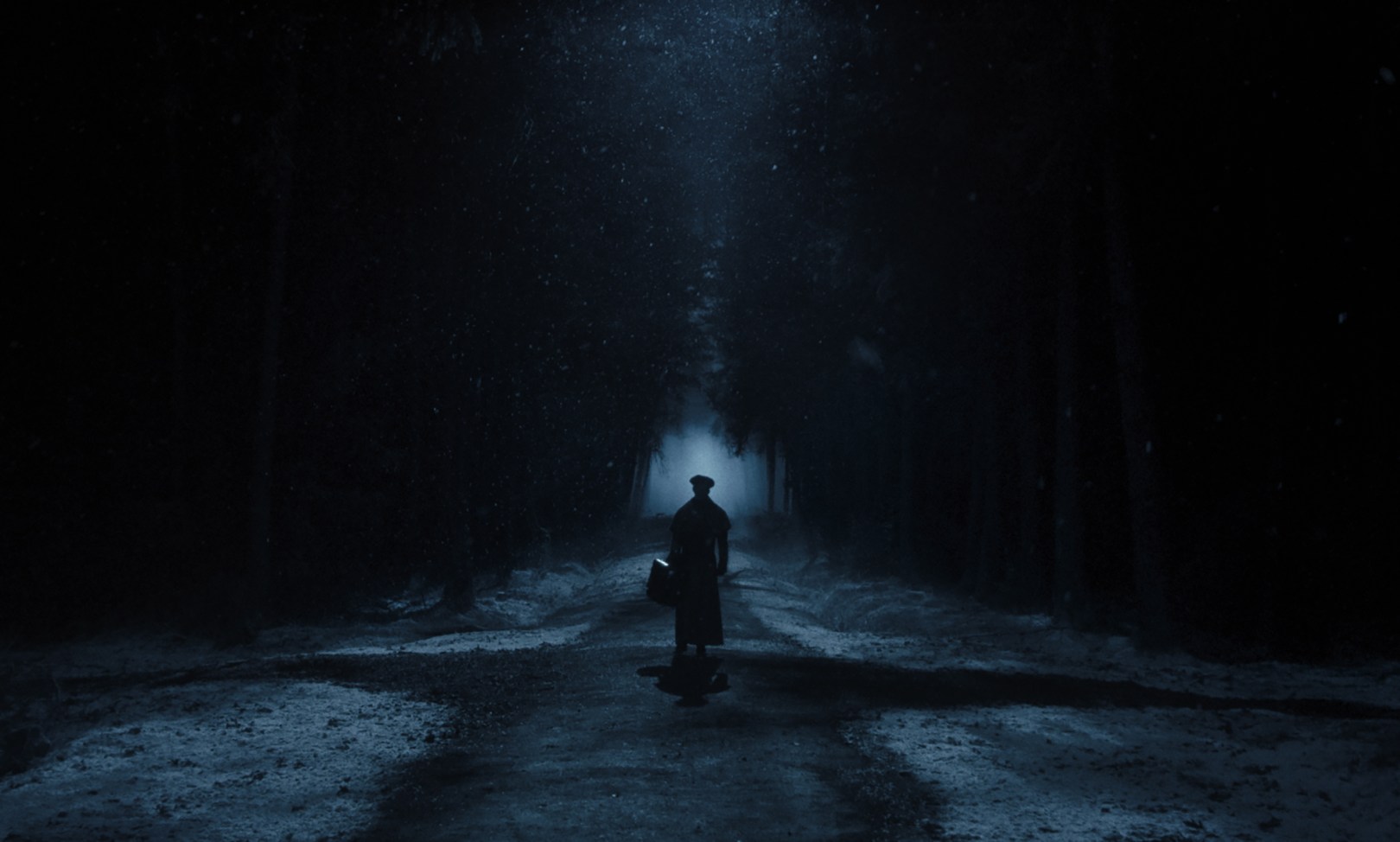
Rarely does a movie so fully embrace its gothic essence, a genre Hollywood seemed to have abandoned. Eggers resurrects that long-lost tradition, pulling us into a nightmare drenched in shadow, decay, and existential dread. This is no mere homage —it is a reimagining, as if the genre itself had been lying dormant, waiting for a filmmaker brave enough to breathe life back into its corpse.
The film starts unfolding like a fever dream, its narrative whispered through low, rumbling sounds and gliding camera movements. We float through crumbling castles and claustrophobic hallways, drawn inexorably toward something ancient and unknowable. Every frame seems haunted, every shadow harboring a presence. It is gothic in the purest sense, dripping with the poetry of decay and the inevitability of doom. Eggers doesn’t just set his story in a gothic world; he lets the gothic seep into every element of his craft, from the eerie sound design to the painterly compositions of Eastern European landscapes in the forest.
At the heart of this tale is Count Orlak (Bill Skarsgård), a grotesque yet hypnotic creation. Skarsgård gives a performance that transcends acting—he becomes an embodiment of rot, a creature both pitiable and repulsive. Even more unrecoginable that his portray of Alfred Pennywise in the IT franchise. There is no glamour here, no seductive Dracula-like allure. Instead, Skarsgård offers us something truly uncanny: a being whose very existence is an affront to nature.
Lily-Rose Depp as Ellen Hutter is the perfect counterpoint to Orlak’s otherworldly presence. Depp’s performance is a revelation, her physicality embodying Ellen’s descent into Nosferatu’s thrall. Without prosthetics or heavy makeup, she twists, shudders, and contorts her way into madness, a visual manifestation of the monster’s creeping influence. It’s a performance that feels raw and unfiltered, as though Depp herself is being inhabited by something unholy.
The film also benefits from Willem Dafoe’s restrained and mesmerizing turn as Professor Von Franz, the Van Helsing-esque figure. Dafoe’s performance is like the eye of the storm—calm, steady, yet brimming with the terror of someone who truly understands the magnitude of what they’re facing. He anchors the film’s more fantastical elements with a gravitas that makes the supernatural horrors feel real and immediate.
And yet, amidst these towering performances, there is Aaron Taylor-Johnson. His character, a rich ship merchant, lacks the weight and menace required to balance the story’s dark currents. Taylor-Johnson, often compelling in roles requiring charm or physical intensity, seems miscast here.
Eggers’ Nosferatu also marks a revival of the gothic aesthetic, a style Hollywood has largely ignored for decades. The genre’s hallmark elements—ruinous castles, the overwhelming presence of nature, and the fraught interplay between beauty and decay—find full expression here. While the gothic once dominated Western cinema, it has largely been reduced to decorative trappings in recent years, with its psychological and thematic depths left unexplored. Eggers changes that, using the gothic as a means of storytelling rather than mere atmosphere. His film reminds us why this genre once held such sway: it taps into our deepest fears of the unknown, the uncanny, and the irreversibility of death.
The film’s technical achievements further enhance its literary quality. The rain, the wind, the very texture of the air seem bent to Orlak’s will. It’s as if the movie itself is falling apart under the strain of his malevolence. Every element feels cursed, from the sound design to the flickering visuals that evoke the sensation of watching a decayed reel of film unearthed from a forgotten tomb. With mentioning that in the second half of the movie, the pacing of the movie changes, and you see that there is less attention for getting those hauting shots and stills.
Eggers doesn’t simply revive the gothic; he expands it, filling it with a contemporary sense of dread. This is a story not just about a vampire but about the inescapable pull of obsession and the fragility of human will. It is both a love story and a horror story, but more than that, it is a meditation on the monstrous. In the end, Nosferatu feels like a dream you cannot wake from—beautiful, terrifying, and utterly unforgettable.
 lariot.nl