
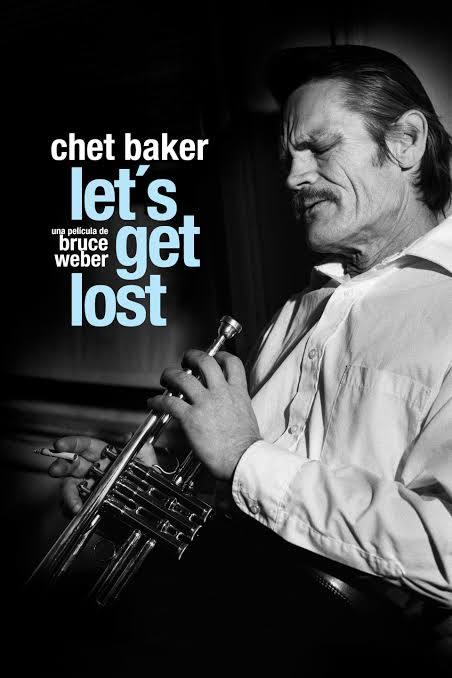
Bruce Weber’s Let’s Get Lost is a mesmerizing and melancholic documentary that captures the enigmatic essence of Chet Baker, the “James Dean of Jazz.”
Known for his smoky, whispery voice and effortless trumpet playing, Baker was both a romantic icon and a tortured soul, embodying the highs and lows of the jazz scene in the 1950s.
This film is less a traditional documentary and more an impressionistic journey through the life of one of jazz’s most mythologized figures.
Weber, a celebrated fashion photographer, brings his signature visual style to the film, enveloping it in lush, high-contrast black-and-white cinematography. The choice of black and white isn’t merely a nostalgic nod to the 1950s jazz era; it deepens the film’s mood, casting shadows that mirror the darkness that seemed to follow Baker throughout his life. The film has a dreamy, almost surreal quality, with scenes blending interviews, archival footage, and spontaneous moments that feel more like jazz improvisation than a structured narrative.
Let’s Get Lost doesn’t attempt to present a sanitized, polished version of Baker. Instead, it embraces the contradictions and complexities that defined him. The film shifts between the glamorous allure of Baker’s youth—when his boyish good looks made him a heartthrob—and the devastating effects of his addiction, which left him ravaged in his later years.
Weber presents candid interviews with Baker’s friends, family, and former lovers, painting a portrait of a man who was as charming as he was destructive. Their raw, unfiltered testimonies reveal a charismatic but deeply flawed individual whose life was marked by broken promises, addiction, and self-destruction.
One of the most captivating chapters of Baker’s life was his time in Italy, where he found a mix of adoration and scandal. During the late 1950s and early 1960s, Italy became a second home for Baker, where he recorded some of his most memorable work and starred in films like Urlatori alla Sbarra. Yet, his Italian years were also marked by legal troubles and drug arrests, which only added to his mystique. The film hints at the bittersweet romance Baker had with Italy, a place that embraced his artistry while also bearing witness to his decline. Through vintage footage and photographs, Let’s Get Lost captures the allure of those sun-soaked European days, where the glamorous façade often hid deeper turmoil.
In his interviews, Chet himself is both captivating and heartbreaking. His eyes, still magnetic but clouded by years of hard living, reveal a mix of regret, nostalgia, and a detached, almost indifferent acceptance of his fate. Whether discussing his music or his struggles, Baker’s voice remains as captivating as his music—soft, soulful, and tinged with melancholic beauty.
Of course, no film about Chet Baker would be complete without his music. Weber weaves in performances and recordings that showcase the timeless allure of Baker’s trumpet and vocals. Tracks like “My Funny Valentine” and “Almost Blue” play over images of Baker’s weathered face, juxtaposing the beauty of his music with the reality of his decline. The music is the soul of the film, capturing the essence of Baker’s artistry: a mix of sweetness, sadness, and a touch of longing. He saved many lives as he lost his own, almost like a jazz saint.
The film’s pacing is leisurely, almost meditative, reflecting the slow, smoky rhythms of a late-night jazz session. It’s a jazz noir that invites viewers to get lost in its atmosphere, much like one might get lost in one of Baker’s haunting trumpet solos. However, this approach can also be challenging for those seeking a more straightforward documentary structure. The film is less concerned with facts and timelines and more focused on evoking a mood, a feeling—much like jazz itself.
Let’s Get Lost is a haunting, beautifully crafted tribute to a jazz legend whose life was as complex and soulful as his music. Bruce Weber captures the allure and tragedy of Chet Baker, a man who seemed to live in perpetual twilight, caught between the highs of musical genius and the lows of personal demons. It’s a must-watch for jazz aficionados and those fascinated by the romantic, yet tragic figures of the music world. While it may leave some viewers yearning for more concrete answers about Baker’s life, Let’s Get Lost excels as an evocative portrait of a man whose music, like his life, was an exercise in beauty tinged with sadness. This film doesn’t just document Chet Baker; it allows you to feel him, imperfections and all—a fitting tribute to the “James Dean of Jazz.”
 lariot.nl