
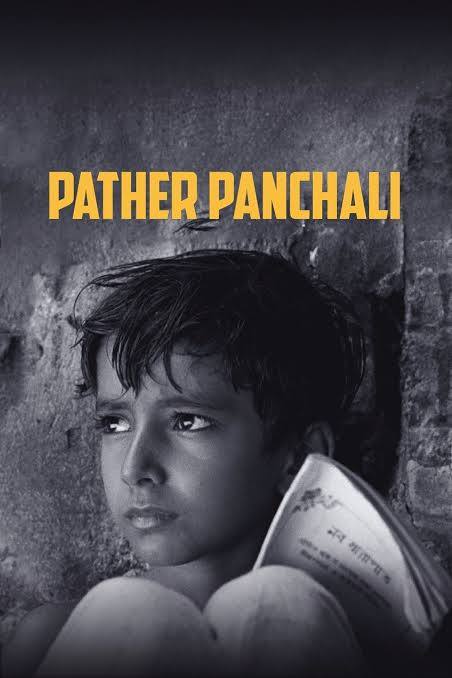
Satyajit Ray’s Pather Panchali (1955), the first film in the Apu Trilogy, is a landmark in world cinema and a deep exploration of life’s fragility and endurance.
Set in a rural Bengal village, it tells the story of a poor family struggling to survive amidst grinding poverty. Through the eyes of young Apu and his sister Durga, the film captures moments of innocence, wonder, and heartbreak, offering an intimate glimpse into their world.
The film’s portrayal of poverty is unflinching yet humane. Ray doesn’t sensationalize the family’s hardships; instead, he depicts their struggles with quiet dignity. The crumbling house, the barren fields, and the scarcity of resources remind them of their precarious existence. Yet, amidst this bleakness, there are moments of beauty and joy— the children playing in the rain, underscoring the resilience of the human spirit, a train rushing through the fields, a recurring symbol in Ray’s movies.
In Pather Panchali it represents Apu’s future in the city, compared to Durga’s female role as future wife, the children playing in the rain, underscoring the resilience of the human spirit.
The women in Pather Panchali are its emotional core. Sarbajaya, Apu’s mother, is a figure of quiet strength, carrying the weight of the family’s survival while grappling with her frustrations and unfulfilled dreams. Auntie Indir is a relentless character who outlived all her peers and refuses to bend to Sarbajaya’s will, driven by her pride. Durga, her daughter, embodies youthful vitality and defiance, her tragic fate highlighting the precariousness of life in such harsh conditions. These women are not just supporting characters but central to the emotional fabric of the story, reflecting the often-overlooked sacrifices and struggles of women in patriarchal societies.
Subrata Mitra’s groundbreaking cinematography captures the rural landscape with a poetic sensibility, while Ravi Shankar’s evocative score adds emotional depth to the narrative. Ray’s direction is masterful in its simplicity, allowing the small, everyday moments to resonate with universal significance.
Pather Panchali is more than a film; it’s a human experience. Its themes of love, loss, and resilience transcend cultural and temporal boundaries, making it a timeless masterpiece that continues to move audiences worldwide.
Written by Cristina Rubiolo
 lariot.nl